Friday, October 31, 2008

Breathe.


After my colleague Janet's brilliant dissection of Sarah Palin's wink, I've felt at a loss for what to comment on. Her assessment of the anatomy of that manipulative facial punctuation is so right on, so to the heart of the matter. I've got nothing to add except my appreciative agreement.

But this morning in my yoga class, as I began the simultaneously grueling and tranquilizing series of exercises that has become my drug of choice, it came to me. Perhaps it's time for an about face. So what I want to say is what I was saying to myself as I bent my 46 year-old body into a pretzel shape I'm particularly proud of: "Breath." That's it. 
Yoga often hurts. Muscles strain. Your outside life insists on inserting itself into the calm you're seeking. The best way I've found to stop the spinning of my mind and my preference for reaction over reflection is to breathe deeply and rhythmically. Yoga requires that your mind be relaxed even as you prompt your body to attempt the impossible. You learn to observe your physical state without judging it or entering to far into it. The result, amazingly, is that the pain recedes. I'm not an expert, and I don't experience lovely glowing, nirvana-like apparitions. But I have managed to experience waves of peace, which come and go, with the cyclic engagement and relaxing of my mind.
What does this have to do with Sarah Palin? With politics? With next Tuesday? Well, somehow, a lot.
I confess that I'm right up there with the most rabid election addicts. Even when I'm supposed to be working, or better yet, relaxing for one brief minute, I am wasting time clicking back and forth between Rasmussen, Real Clear Politics, CNN, BBC, Al Jazeera in English, The New York Times, the Washington Post, Andrew Sullivan's "The Daily Dish," Salon, Slate and an increasing dose of YouTube (as it provides me all the American stuff I miss by living in Italy) in search of a whiff of where this thing is going "right now." And as we all know the internet and our bottomless addiction to it have reinvented the immediacy that "now" connotes. You can read a story "now," only to have to click to another source to read the latest version, which is already more "now" than the one you just read. All day long between other jobs and responsibilities I follow the polls ticking back and forth by tenths of points in their nervous, incremental, undecided—and very irritating—little dance.
It is, in a word, insane.
But what does this mean—this continuous flow of updates, analyses, commentaries, attacks and counter-attacks? It means, really, that no one's thinking a whole lot. Everyone's reacting. And over-reacting. Who's breathing deeply in the middle of all this? Who's observing, reflecting?Every now and then Sarah Palin does take a deep breath, but like her wink, it's designed for dramatic effect. ("While I take a break to breath you can absorb the truth of my latest lie.")
I can't make this rolling stone stop to gather moss, but I can stop the way I let it infect my mind and my quality of life. Because it is effecting my life, and not in a good way.
This election IS important. I'm not denying that. It may well be the most important thing that happens to us American collectively in our lifetime. But, I repeat, but, it is not the most important thing in my existence. 
I live. I breathe. I love. I have children to raise. And while I'd like to raise them with a consciousness about what's happening in this world, this nonstop participation in the media circus is neither consciousness nor conscience at work. This is addiction. This is madness. This is not helping us.
From here on out in this post, please slow down. Forget about all that mad bubbling stirred up by your favorite internet news source. Breathe. Think about how your breathing feels as it travels in and out of you body, carrying in new air and carrying away old. Breath deeply. Enjoy the fact that you can. 
I'm asking you to do this because what would help us, would be to stop. To still ourselves. To find a silence inside. What would help us would be to breathe deeply, to slow down our processes, to reflect well and long and without hurry or preconceptions about what is happening in our lives. To observe from a distance. What color is the sky today? How does the air feel against our skin? What muscles hurt? How do we really feel? How can the relaxation of the mind relieve our various ills? How long can we sit still and simply observe what that feels like—without input, without stimulus, without browsing. Without judgment of ourselves if we fail, at first, to find stillness.
And then, with calm and maybe with a greater degree of detachment, we can view the news as a deservedly small part of an even larger picture: just existing. And maybe there, we can find a place to contain it so that it doesn't consume us and in so doing destroy our capacity to react appropriately and to live our lives despite it.
Breathe in. Breathe out. Breathe in. Breathe out.

—Charlotte

Tuesday, October 21, 2008

Why We Get Sarah Palin

The McCain ticket, as well as America's incessantly shrill and one-note corporate media, wanted us to believe Sarah Palin was there to bring women to their side. You know, make Hillary supporters believe Oh look, she's one of us. She's wearing...a skirt. To get us to vote Female First, issues and intelligence and demonstratable ability and country last. Vote with our vaginas, as if our vaginas weren't beyond exhausted as it is.

Seriously, with all the laundry and coq au vin family suppers and spontaneous acts of complex multi-tasking our nifty anatomical regions must perform on a daily basis, how ever do they find time to cast a deciding vote? Oh so that's where the term ballot box comes from! 
But wait, once again, I digress. 
For six, seven weeks—although, dear reader, it feels like 107—everyone propped up Sarah Palin as if she were the crimson-clad answer to all things womanized. Even Geraldine Ferraro, whom I used to respect, acted as if Palin deserved extra girl credit simply for being utterly X instead of nasty old Y. Gravelly-voiced newscasters trumpeted how wonderful it is that someone from tiny Wasilla could shatter our eternal glass ceiling. My husband turned to me in utter horror after the VP debate saying 'Will women honestly fall for that?' because even an intelligent man such as he was wondering if the pundits were right, and there's some sort of female gender switch which automatically ignites, requiring we vote for the one most 'like' us, regardless if she's completely unqualified, against every ideal we espouse, dangerously inept and incurious, strangely arrogant and oddly over-confident, miraculously uninformed and stupendously dangerous for our democracy. 
And to my husband I screamed a mighty No! Only women who are (all those words above) would vote for her! 
And then, friend, I got angry. And I've been growing steadily more angry ever since. 
This Governor wants to overturn Roe v. Wade. This Governor would enforce a Constitutional Amendment on gay marriage. This Governor wasn't simply into banning books, she was into pulling books off library shelves with her own evangelical hands.  This Governor believes she is on a mission from God and this God can pray the gay right out of you. And 'win' Iraq. She doesn't believe climate change is man-made, but she does believe in Armageddon. She doesn't believe in sex education unless it's abstinence-only, but she does believe in making rape victims pay for their own rape kits. 
She has opposed clean water regulation and has approved legislation allowing oil and gas companies to nearly triple the amount of toxic waste they can dump into Alaska waters. She loves earmarks as much as she loves aw-shucks folkisms, believes creationism should be taught in every school in America, believes in unlimited off-shore drilling, thinks slaughtering wolves and soon bears from on high is not simply good clean fun, but a God-given right, too. 
She believes in cronyism and nepotism but more than anything, anything, she believes in what got her where she is in the first place, and that's the last refuge of the female scoundrel: The Almighty Wink. Winking at cameras and crowds and world leaders as if she's....she's....gosh darnit, the second-prettiest lady in Alaska. Winking as if that, forget the nod, can make all sins wash away in the night.
But see this is where my anger ends. And my chromosomes stand up and applaud. 
Because women, regardless of our political affiliation, regardless how far left or right we are, know the shallows that lie beneath a lady who winketh. And last week, as her numbers plummeted, I was proved right. See, we know she's part Mean Girl we knew in high school and part Human Being Who Doesn't Deserve These Heights. We understand her wink-ness is a way of deflecting any sort of intelligent response, of leveling the playing field to something truly subterranean. She can't answer the question, so she bats it away with an eyelash. She squeals Gosh and Darn and because it worked for Bush, perhaps it will work for her. She uses mascara, liner and shadow like they're the Holy Trinity of Vanity, projecting the humble unity of 'we're all in this together don'tchaknow.' As well as 'See how easy breezy this whole running the United States thing really is?
But we see it and we're embarrassed. Not embarrassed because she's a woman but embarrassed that anyone believes she represents us, as Americans. As thinking individuals who care desperately about the direction this country takes. 
And it turns out, as it always turns out, her biggest appeal isn't to women and never has been. As it turns out, her biggest appeal is to—ta da—men.  
Men in trucker hats and baseball hats turned backwards and inside out, men who think Barefoot and Pregnant is the name of a sweet new cologne (Man where can I buy me some?) men who yell 'You tell 'em baby' at rallies and wear buttons proclaiming 'Proud to be voting for a hot chick' and who far, far overuse and misunderstand the word 'dude.' Men, in other words, who think she's winking at them. Because she sure as hell isn't winking at us. 
And that is why, with fingers crossed and hope in my heart, I hold my breath and await Election Day. 
My vagina is voting for Obama/Biden.
I hope yours, no matter how exhausted it may be, is too.
—Janet
        

Wednesday, October 15, 2008

My mother, myself

My mother was a beautiful woman.

We all say that about our mothers, it must be some evolutionary impulse I suppose, and we hope that by saying so we reap the genetic benefits that follow. But in this instance it takes no amount of exaggeration for me to say that my mother was quite beautiful, and that I have always paled in comparison.

When I was young it seemed as if all my friends had mothers straight out of Happy Days or The Waltons or All in The Family (seriously) and mine seemed like nothing less than a young Lauren Bacall, which both intimidated the hell out of me and made me alarmingly proud at the very same time. How she managed to look lovely regardless of how little money we had (and how less and less it became after my father was struck with cancer) I will never know. But how she felt about beauty is something I will always remember: it mattered only a little, and in comparison with generosity and grace, kindness and humility, intelligence and tolerance, it mattered not a whit at all. Her aim in my life - in the life of all three of her children - was to raise the best adults, the best human beings, she possibly could. What we looked like, and what we achieved with those looks, meant absolutely nothing to her.

What mattered was the number of novels we devoured and the grades we brought home, those words teachers scrawled on report cards as to whether we were a pleasure in class or utter hell, the friends we coveted, the loves we reciprocated, whether we knew enough to do something brilliant in this world, whether we had the grace to fail and get back up. She told me a hundred times that looks were temporary - a blessing when acne sprung upon me with Wagnerian ferocity; when pizza and chocolate became my Prozac of choice and thus poundage did apply - and that to judge ourselves either too harshly or too lovingly was a trap. A joke. A lie.

I think she watched her wrinkles come and her red hair turn dark and was glad she had Updike and Cather and McCarthy and Dinesen to keep her company, but I also know that growing older pained her. Not in the expected ways, because she believed Bette Davis when she said 'Old age is no place for sissies.' What pained her was the invisibility. The gradual fading away while younger, newer takes over. How she went from having all doors opened to just a few. How years became a slight cross to bear, although she bore them so regally, and how inside she still felt 32 and could not understand how no one saw that. The way that years should add up to something, not detract. She despised my admission that at 42 I felt 'too old' to begin a real writing career. For if I felt 'old' at 40 what did that say about her at 70? Was I negating her still being on this earth? Could I not see she was just as viable if not more so?

And of course that's not what I was saying at all.

It had nothing to do with numbers or wrinkles or chronological gravity: it had to do with fear of a blank page and a new start and it was personal, all mine, just me. If she were still here I would tell her that. If she were here, my beautiful brilliant mother I would take her hand and tell her that nothing ever diminished her. Nothing cut her down. Nothing made her less. But she is gone and I am left with a blank page again. At 49, I do not know how old I feel. Sometimes I'm happy to merely feel anything at all.

—Janet

Tuesday, October 14, 2008

Where to draw the line


I've been working freelance this week on a European line of products, found in the pharmacy, that help combat cellulite. By all accounts—pharmacists and friends alike—the stuff works. It's been around a long time, and I suppose that one could argue that its dated look in packaging and advertising contribute to the sense one has that the brand is "trustworthy". There are no sleek modern graphics to seduce you. No minimalist lines or frosted glass. Instead, the company's claims are specifically spelled out on the packaging. "Increases tone around the waistline by 37% within 4 weeks of use." Stuff like that. The names of mysterious active ingredients appear as well, in hefty Helvetica Neue expanded. Along with this rigorously Swiss typeface, the advertising has featured—as do competitive campaigns for brands such as La Roche, Vichy, Collistar, etc.—a perfectly perfect woman, or parts thereof. When asked to take a stab at refreshing or modernizing the campaign, one of my first thoughts was to back off on the retouching. Too much perfection a dead body makes.

Nonetheless, in the end, I hesitated to even broach the subject. This company is not Dove, and they could easily argue that their success, which is enormous, is based on these very perfect, inhuman images. Further, I discovered that as I was presenting my own updated versions of the ads, I too was tempted to retouch the photos I'd been given to work with. I wondered why?

I can't really answer the question, other than to say that the model the agency had photographed was so close to perfection, that certain flaws felt like they had to go. On the other hand, as I poised my Photoshop airbrush over her tanline, I realized that the retouching I was doing, was nothing compared to what they would want eventually. In the end, she would be truly airbrushed, resculpted, scrubbed clean of any and all variations in skin tone. Her curves would no longer appear soft, but as firm and cool as marble. She wouldn't be she, she would be a platonic ideal. Both boring, and a lie. And this coming from a company which takes great pains to precisely quantify its promises.

I'm not laying blame here. I'm just tossing it out there for thought and consideration. Because the other thing that bothers the brain is this: how many of us would buy the product if the images were "real." How do you show "37% more tone"? Compared to what? Without the ideal of perfection dangling carrot-like before our eyes, do we take the otherwise honest bait? I don't know. Maybe not. And in fact, it doesn't even feel like a lie; it merely feels like what it is: an obvious idealization. I know that won't be me, but I don't really care. 37% of something moving in that direction seems like a fair shake.

Then I remembered a fascinating article entitled "Picture Perfect" which I read in the May 12 issue of the New Yorker about perhaps the best photographic retoucher in the world, Pascal Dangin. He was the retoucher behind the Dove campaign, behind all those "real" women that we assume are appearing "as is." Don't be fooled; even they have been doctored for presentation.

When he explains that he'll leave an actress' crooked teeth and laughlines because they make her who she is, he is telling us from a position of great visual authority that there's a significant difference between beauty and perfection. Aging is hard enough, but we would be greatly accomplished if we could assess ourselves in the mirror with as much humanity: what of our reflections is simply who we are? and what would be left if we erased it?

—Charlotte

Friday, October 10, 2008

Growing up.

Funny how time warps and weaves and folds back on itself.

Our last entry was in 2006, and perhaps frustrated that our book sales weren't doing better (that's another story for another time) we stopped posting onto Ripe: The Movement. But the fact of the matter is, our book may have slowed down, but the movement of ripeness goes on with or without us. We were happily reminded of this by a reader named Wendy.

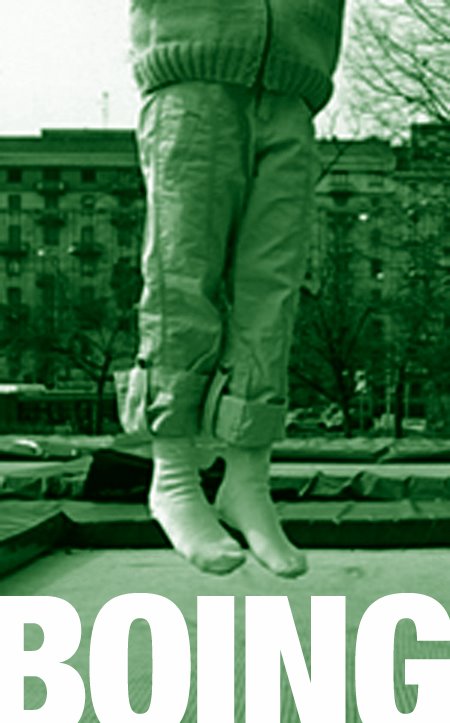
When last we were posting, we'd both been hit by a series of deaths within close range, and our moods, world-views, and words were colored accordingly. Even though we said "Boing" in May 2006 with the intention of jumping back into action, the fact of the matter is that springing back takes time.

But time has passed: more than two years. And in that time, we've both regained a sense of youth and resilience. Some experiences are just to be waded through. There's nothing to do but hold tight and see where you end up. We're happy to say that we've ended up "up."

In the past weeks, we've also decided to dive back into our working partnership, and to take advantage of the ways in which we've both grown individually and professionally in the past few years. As Janet always said, "you don't grow old, you just grow."

Tuesday, May 09, 2006

Boing

After a very long silence, there are once again signs of life.

I suppose it was clear from our last entries, that our strong belief in "ripeness" as a personal concept and metaphor just wasn't strong enough to stave off death in our midst. Suffice it to say that for both of us it has been a hard year, full of loss and mourning.

You've seen those diagrams of the Earth's crust? You know how the puzzle pieces fit together and occasionally slide and bump making us all aware of our tininess in the grand scheme of all things geologic and otherwise? Well, it's been a year of existential earthquakes.

But.

Even though things have shifted—we've lost people and we've lost part of ourselves and we've most certainly lost our balance—we are still standing. We're now looking at what's left, the lighter load, and we're doing with it what one must do.

In our book Janet writes, "The world and all its gravity knocks us around. We all fall; some of us learn to bounce." And so bounce we do, and bounce we will. And it will take many forms: bouncing back, making leaps of faith, springing forward, jumping for joy, and the plain old hopping out of bed in the morning.

Airborn. At least til we touch down again, and prepare ourselves for the next launch.

Saturday, December 10, 2005

What we've lost. And what we've found.

Today is insanely blue and crisp with the kind of cold that shows your breath and catches it at the same time. There’s still snow up in the hills and Douglas Firs lined up in no longer "vacant" vacant lots and Christmas/Hanukkah/Kwanzaa/HappyHolidays are upon us, literally squatting, really, demanding attention must be paid, offerings of joviality and radiant happiness and I’m trying to be filled with that, believe me, but mostly what I am is another vacant lot. And I’m sitting here trying not to think of the people I’ve recently lost, which is such a stupid, stupid word—lost—as if they’re not dead I’ve just misplaced them, left them at some cash register or stuffed in a pocket, because I never left them, they left me. They’re gone, done.

You’re left with a hole—and what remains is what you fill it with. As my let-me-bow-before-your-brilliance-like-an-insignificant-child poet du jour W.S. Mervin puts it, "Your absence has gone through me/Like thread through a needle/Everything I do is stitched with its color."

So here’s to the color I look for around every corner, behind every tree, every day. These joyous, breakable times just seem to intensify it.


—Janet

Saturday, December 03, 2005

A beautiful shade of blue.


Ripeness doesn't come without tears or loss or a heavy sense that things are moving inexorably in a direction we didn't chose. Dammit, this getting older hurts. It bruises. It batters with reality and doesn't quit. That's how I feel right now. This month. Lately. Something has happened, and it's changing me, and I will let it transform me into something good and strong and maybe, if I'm wise and willing, a little better. But it doesn't feel good. I'm being forced to let go. To admit. To confess. To say "Goodbye." To surrender. Yes, really. And not just once. But over and over again.

And I can't escape it. No one can escape it. We didn't say it in the book, but maybe we should have. The hard thing is death. Not menopause (that relative joyride), but death. Because sure as rain, it's coming. In fact, it's already come. It's come to our parents. And if it hasn't visited them, it will. It's come to so many friends, friends whose names we repeat daily, litanies, prayers, to keep them close, and to remind them, if they are listening, that they are with us still. It has come to novelists we loved, and poets we wanted to be. It has come to contemporaries who sang bad songs that made them momentarily famous. It has come to spouses, by god. Soul mates. It has brushed too close. It sits behind ringing telephones at ungodly hours. And like the postman, it rings more than once. We have survived so far, and we will carry on, but we have to face the facts. We will carry on only so long, then others will say our names every day.

This is hard, so hard. The sadness is deeper than the Mariannas Trench.

But all I can say, though I can't explain it, is that there is a beauty in it too. The same kind of beauty you find in the eyes of a damaged soul, or a person who has seen more than you have. The same kind of beauty that radiates from someone hanging on with the help of medicines that can't be pronounced. The beauty of that which is fleeting even as you discover it. The beauty of youth. The beauty of the very, very old. The beauty of hands. Coffee cups, one day to be chipped and rendered useless. The last time you speak to a friend.

And it is this beauty, the beauty of what we hang on to with each breath, that matters. Nothing more. Nothing less. Airy and light as that depression-colored sky. Or deeper and darker and darker still, so blue it's black, revealing as we sink even lower into that trench, that even when the light can no longer be seen, life is everywhere. —Charlotte

Wednesday, November 30, 2005

Marilyn Monroe Redux

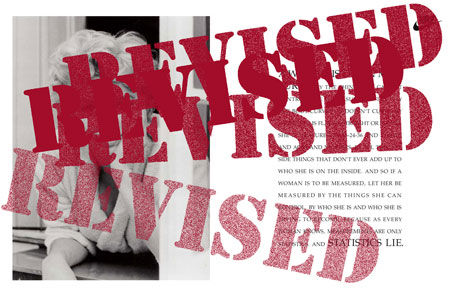
Several years ago, Charlotte and I created some Nike ads that struck a nerve with a lot of people. Female people. Male people. Children as young as 12 and women as old as 82.

We'd like to offer up a revision to the original, revised to speak to the numerals we feel measured by now, the road signs that tell us how far we’ve come, another year another year, like the marks a doomed prisoner makes on his cell walls. Isn’t that supposed to be a good thing, this being alive? Shouldn’t the more digits we add up give us some sort of prize, some sort of Yay Rah, you’ve gone past Go again, here’s a little reward? Isn’t living the point to this whole mad existence? But it’s not, you know it’s not, not here in Ever-Younger-Me-Me-Me-America. Why do we cringe or lie instead of accept and ask for more, please? Anti-aging. Anti-changing. Anti-living. We’re crazy, completely nuts if we think we can turn back time, break all the clocks. God, can’t we ever grow up.

And so, without further ado...the text should now read:

A WOMAN IS OFTEN MEASURED
BY THE THINGS SHE CAN’T CONTROL.
SHE IS MEASURED BY THE AGE OF HER SKIN AND HER FLESH,
WHAT FALLS TOO FAR OR HANGS TOO LOW,
BY THE DECADES SHE HAS SEEN INSTEAD OF
THE DECADES STILL TO GO.
SHE IS MEASURED BY NUMERALS AND MILE MARKERS,
BY 21 AND 39 AND 55,
BY QUANTITY NOT QUALITY,
BY ALL THE OUTSIDE THINGS THAT DON’T EVER ADD UP
TO WHO SHE IS ON THE INSIDE.
AND SO IF A WOMAN IS TO MEASURED,
LET HER BE MEASURED BY THE THINGS SHE CAN CONTROL,
BY WHO SHE IS AND WHO SHE IS STILL TRYING TO BECOME.
BECAUSE AS EVERY WOMAN KNOWS,
NUMBERS ARE ONLY STATISTICS.
AND STATISTICS LIE.

Wednesday, November 23, 2005

For my father.

Last week, I flew from my home in Italy back to the United States to help my brother tend to my father. This is a trip I have imagined making many times, and one which I have always dreaded. It was, in a sense, inevitable, but that didn't diminish my fear of it.

My father is not old by his family’s genetic standards, but age has hit him. Something has happened to him, and he is no longer the same. Not strong. Not always coherent. Maybe not always understanding of what’s going on around him. It’s hard to tell. His world is much smaller now, more closed, defined by the limitation of his own movements and the struggles both to comprehend and to respond. The doctors were utterly unenlightening in their diagnosis. “One of many possible forms of rapid onset dementia,” they said, then they added little else besides, “He can never go home again.” So independence and mental acuity have been replaced by utter dependence and a mental cloud, which blocks articulate conversation but lets the rays of love and sweetness flow freely. He is not himself, yet he is utterly himself. And his strange way of speaking is often more accurate than reality: At one point in the hospital he said, “When did we get to this country? When did we pass through customs?”

And I, well, I’m struggling with all of this. How can I feel ripe when the fruits of my own father are falling from the tree? How do I give to children on one side and to aging parents on the other without depleting my own resources? How do I contain all these emotions, register all the sadness, and still find joy?

I asked my brother, “Do you feel older or younger now?” And he answered without hesitation and a deep sigh, “Older.” I said I felt both. Older, because we are next in line. (This is just the fact, ma’am.) Younger, because, damn it, compared to my father, I am young. I am still vital and free and mobile. I am still capable of acting according to my wishes and of saying what those wishes are. And younger because, despite all the unanswered questions about what it means and how do I do it, I am—somehow—doing it. I am living it. I am giving at both ends and all around. And miraculously, there is something left of me, and she is—believe it or not—thankful for something she can’t name and singing because her voice must sing.

Life is life until it isn’t anymore. My father isn’t dead; he’s alive. He's not all there, but I haven't lost him. Not yet. And despite his state, there is still a will to go on and to live each day, and there is joy there. When he rolls into his bed at night, he chuckles, as if to congratulate himself, or merely because he finds it all amusing.

There is a lesson there, and without doubt, a gift to me, if I will only take it and hold it close. —Charlotte

Friday, November 11, 2005

Ripeness. Another take.

Ripeness is
what falls away with ease.
Not only the heavy apple,
the pear,
but also the dried brown strands
of autumn iris from their core.

To let your body
love this world
that gave itself to your care
in all its ripeness,
with ease,
and will take itself from you
in equal ripeness and ease,
is also harvest.

And however sharply
you are tested -
this sorrow, that great love -
it too will leave on that clean knife.

—Jane Hirshfield

Monday, November 07, 2005

The 2008 Ticket

On November 5, 2005, Maureen Dowd wrote: “I've said it before and I'll say it again: Men are simply not biologically suited to hold higher office. The Bush administration has proved that once and for all.” She goes on to rip apart the current powers that be, using terms and phrases that are often reserved for women. Example: “These guys can't be bothered to run the country. They are too obsessed with frivolous stuff, like fashion and whether they look fat.”

The Weekly Standard simultaneously criticized her for caricaturing the men in office (not only in this editorial, but in all her editorials), but it’s a glaringly weak criticism when the fact of the matter is that it’s not terribly difficult to caricature people who make caricatures of themselves. She did the same to Clinton (which, of course, the Standard approved of). And she’ll do the same with whomever next occupies the seat. When and if he deserves it.

Excuse us. When and if he or SHE deserves it. And why not? we ask. For as Maureen concludes, “Women are affected by hormones only at times. Vice's hormones rage every day.”

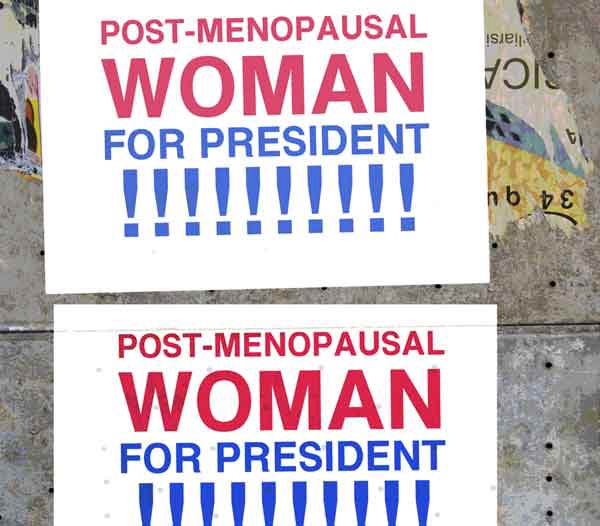
Which brings us swiftly to our point. If women are not well suited to office because of their hormonally ruled natures, wouldn’t a post-menopausal woman be ideally suited to the job? Republican or Democrat aside, there are numerous still-fertile women and peri-menopausal women who would be just as well qualified as the current cast of characters (if not better). But how could we ever be sure—our persistent detractors would remind us—that PMS wouldn’t cause Ms. President to—to what? imagine WMDs? At least if she were over all that upsy downsy hormonal shifting, we could rest assured.

Sunday, November 06, 2005

It's like this.


There's no going back. There's only going forward. Fasten your seatbelt. And enjoy the ride.

Image © Charlotte Moore 2005

Saturday, November 05, 2005

Remember this:

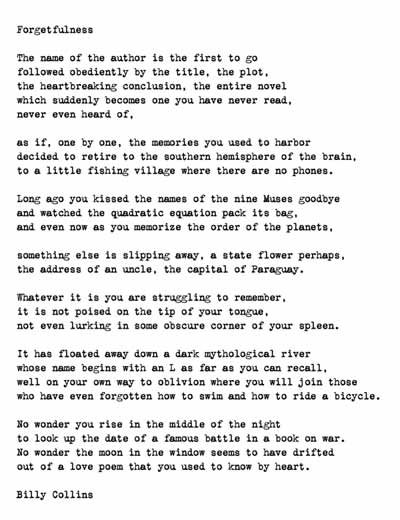
We were going to write a blog about something else, but we forgot what we wanted to say. Sound familiar? In 1996 we learned the Italian word for seagull while on vacation on an island near Sicily, and in that instant we let go of calculus.

Billy Collins, America’s Poet Laureate in 2001, writes about it eloquently:But it’s not all about what gets lost by the roadside, is it? If our brain is a hard-drive, and its disk space is limited, then something is pushing these things out.

When we’re twenty, we’re all about ourselves. We’re about our careers. We’re about “me, me, me” and “my, my, my.” Granted, some people never grow out of this—sometimes, alas, entire societies don't grow out of it—but the idea is this: When you grow up—not old, but up—you gather another kind of information. About love, compassion. About raising children (your own and other people’s). About caring for the elderly. About keeping it all together, all the time. These aren’t skills you are born with. They are human behaviors that are learned over time. They don’t come with degrees, textbooks, or salaries attached. But they do comprise valuable learning, and they are richly rewarded.

This stuff, then, that takes over our gray matter (and the pink matter of our hearts) is well worth a few lost state capitals. You may not remember that love poem you once committed to memory, but at least now you understand a lot more about love.

Thursday, November 03, 2005

So my wife, will she be like this forever?

A few weeks ago a man approached us at a book signing. He was a bear of a guy, big and a little Hemingway-esque, with the resigned look of someone who had eaten something disgusting but allegedly healthy. He handed one of us a copy of our book and said "I’d like you to autograph this for my wife." As we signed he said he’d really enjoyed the reading, he thought his wife would love the book, she’d been having a really hard time. And even though there’s nothing wrong with her suddenly she thinks there’s nothing, not one damn thing, right with her. He thanked us and turned to go, but then looked us right in the eyes and said "She loves me. And then she hates me. Tell me this will someday end." We’re grown up. We’re professional. We’ve seen it all. And yet we wanted to throw our arms around him and gush like fools and slobber all over his not-yet-gray Papa-ish beard for being, well, for being man

enough to ask a stranger for help over his menopausal wife. But we didn’t. We restrained ourselves and gushed later. Right then we just nodded and sagely replied Yes. Trust us. It won’t last forever. It just sometimes feels like forever. He looked so relieved. As if we were the Oracles of Menopausal Women. And then we wondered What if she stays like this a little too long? Because with Google the way it is, he could so easily find out where we live.

Tuesday, November 01, 2005

You=Your Story

Your face is your autobiography. And in any case, it is a story about change v. stasis. What you did v. what you didn’t do. What you felt. What you conquered. When you failed. When you figured it out.

A. The traces of requited and unrequited love. The signs that you lived your life in the sun instead of in a closet. Proof that you raised your eyebrows more than once in amazement, awe, disbelief; and that you lowered them, on occasion, in disapproval or merely to take a closer look. B. Cousins of A, these two little marks on either side of the bridge of the nose, belong to scrutiny. Caring. Listening attentively. Or watching history unfold. Trying to understand. Saying, if necessary, “No.” A genetic gift from your mother. C. The curve from the nostril to the edge of your lips. You smiled. You talked. You spoke your mind. And smiled some more. If you don’t like the way it looks, just keep smiling. That’s where it belongs. D. Tiny lines above the lips? Good girl. That means you do your share of kissing. E. Something under the mouth you don’t like? Don’t worry. It gives you gravitas. F. Laughter. Lots. Apparently. G. A little puffy? The ultimate sign that you’ve burned the candle at both ends, just because it shed such a lovely light.

The reading between the lines: Sorry, can’t reveal that here. Mysterious. Private. Not for prying eyes. Suffice it say, however, that without the lines, there’d be no “between.” Just a blank for all the world to see.

Saturday, October 29, 2005

Age: Not a label, but a badge.

Instead of wearing a scarlet M and believing ourselves to be over the last possible hill, maybe we should proclaim ourselves in a different way. Overjoyed for what we've achieved. Overjoyed that we're still here. Tolerant of things we used to get ourselves in a mad wad over. Proclaiming that now, finally, when some in the world would want to believe we're done, over, bye-bye, shut up, that we've finally arrived.

We spend so many years fretting over all our insecurities and worries and fears. And if we can't finally shove that aside by the time we're forty or fifty, when will we? What does it take for us to say, "Don't judge me by my age or the effects of gravity or whether I'm perfectly perfect on the outside. Judge me by my contributions, what I give back and what I've learned, whatever wisdom I've accumulated (or had thrust upon me without my even quite knowing it), what I'm willing to fight to the death for"?

Gray hair isn't a sign of mental decay, is it? Wrinkles and reading glasses don't add up to diminished returns, do they?

There's a woman we both know in California who passes herself off as learned and wise and ripe, and yet she lies about her age. Doesn't that lie diminish every one of us? And who is she really lying for—the world or the little voice in her head that says, "Time is running out?"

Friday, October 28, 2005

Uncertain? Certainly.

In the New York Times on October 25, we stumbled across “As Feminism Ages, Uncertainty Still Wins,” a review of Ms. Wendy Wasserstein's latest creation, "Third." An excerpt of that review follows:

"...Ms. Wasserstein has shepherded her fearful brave new women (who have usually been roughly the ages of their creator when she conceived them) through single motherhood (with "Heidi"), lonely peaks of success ("The Sisters Rosensweig") and the fishbowl of national politics ("An American Daughter"). Now this cozy alter ego...is hitting menopause. And she's still having problems figuring out who she is."

Well, our hat is off to this heroine, who much like ourselves is often perplexed by that very existential of questions: Who am I (after all these years) and why can’t I answer the question?

The fact is this: The more we grow up, the more we realize that we cannot be certain neither about the external world nor that vast internal world within ourselves. We are no less in flux than that stuff that swirls around us. Age doesn’t fix us in time. We do not “arrive” and say, “Ha ha! I’m here!” then whip out the lawn chair and sit all-knowing (and bored) for the rest of time.

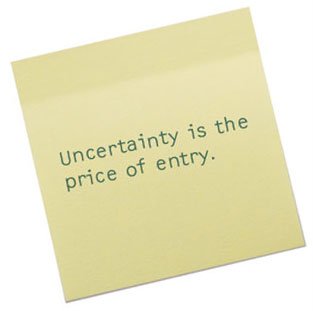
Our uncertainty is an opportunity to experience wonder and awe. The gaps in our understanding are chances to learn or change direction. Or, more likely and most importantly, confronting our own uncertainty is the mother of all chances to accept and experience the depth of our own humanity.

The aforementioned review concludes as follows: “…Ms. Wasserstein is politely asking audiences who have grown older with her to acknowledge their fears, their limitations and the possibility that they might be wrong on subjects they were once sure about. In taking her uncommon women through the decades, she sweetly but shrewdly suggests that life is an unending identity crisis."

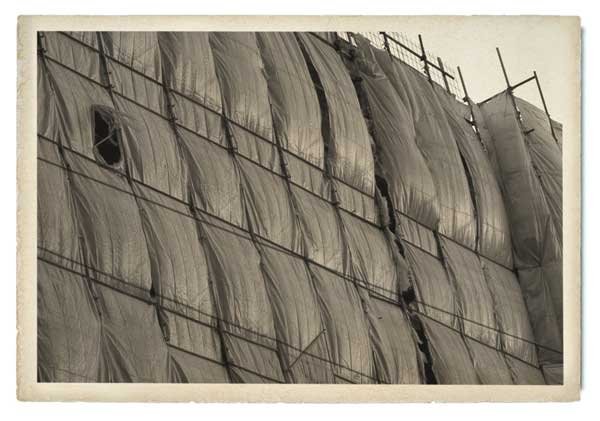
Crisis? Yep. Or, you might prefer the words "Construction Site." As the Postcard from the Hill (insert) states: “Every time I think I’m finished, I see I’m still a work under construction…” (RIPE, page 123). This means change. Lots of it. Risk. Opportunity. Falling objects.

Bring your hardhat.

Thursday, October 27, 2005

Why the sticky on the nose?

This book, our book, is about growing up. It's about how it feels to grow up and how it hurts to grow older and how, in the end, it's all for the best. It is, we'll say again, about how it all feels.

And that is why the lovely woman on the cover has a yellow sticky stuck on her nose. That sticky is the equivalent of the filter society places in front of us. So that despite who we are on the inside, despite what we offer up in abundance, despite what we have often become and accomplished, there is a label which says "old" or "aging" or "getting there" or "forget about her" or "invisible." These are simple, stupid labels attached to visual cues, nothing more.

But, that sticky is also something else. It is also, and equally, her voice talking back. Confronting society. Taking a stand. Her mantra is "despite." Despite you, I am full and vibrant and growing. Despite you, I am on the way up, not on the way down. Despite you, I am what I truly am and not what you think you see. Despite you, I am ripe.

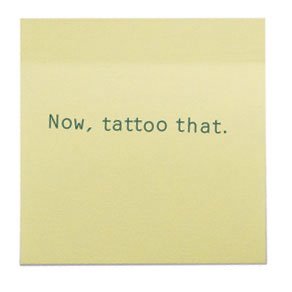
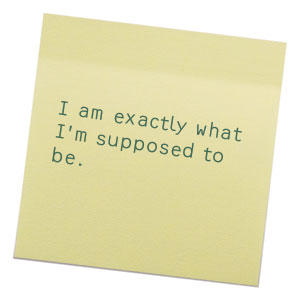
And so, without further ado, we inaugurate the daily sticky.

*If you are interested in this book, please see our website at ripethebook.com. The book is available at bookstores, including amazon.com. If you are not interested in the book, that is fine, but please support, celebrate and spread the concept of ripeness.

Wednesday, October 26, 2005

Why the word "ripe"? Why a movement? Why now?

Women of a certain age (and you know who you are) are suffering. Maybe not loudly. Maybe not openly. Maybe not even fully aware. But they—we—are suffering nonetheless. Ageism is running rampant. The worship of youth is knocking down other subjects of veneration. Pedestals are being overturned, only to be built under people who have not lived enough to stand upon them.

For a woman of a certain age to look in the mirror and feel fully proud, fully pleased, fully accepting is a rare event to say the least. There is a sort of conspiracy afoot, is there not?

Let's consider:

Why do more and more advertising briefs specify a target audience between the ages of 18 and 24 (maybe on a generous day, the top end is stretched to 35) when the majority of disposable income is located elsewhere? Is it because 18 to 24 year-olds are dipping into other people's pockets to make influential purchases, or is it because more and more of us with disposable incomes respond to messages tailored to the 24 year-old brain? Because more and more of us want to be 24?

Why are female characters in movies who display the hutzpah, know-how, professional seniority and life experience of much older women typically given to female actors in their twenties, even at the risk of the film's story losing credibility?

Why do ads which ask us to consider a diverse panoply of anti-age products consistently feature models who have no wrinkles?

These are crude and obvious examples, but it is just to say, again, that we are surrounded by images of youth where youth is not even appropriate, and this perversion of reality to sell appeal cajole seduce, has created another Enemy, and She is Us.

We don't spend a lot of time whining about the contents of the previous paragraphs, because we're intelligent women, and we know, well, we just know what we know: That it's a lot of b.s. We skim over it, ignore it, move on. But what our intelligence is less capable of combatting is the judge that resides within us. Perhaps the existence of this judging female voice predates modern marketing. Perhaps Cleopatra was driven to the asps because her beauty was, at last, leaving her. But we would place bets that this is not the case. As strong as we are, as smart as we are, as self-effacing and outward looking, the constant, non-stop societal obsession with youth has seaped into us, turning us too often against ourselves, when we are, in fact, better—and stronger and wiser and fuller—than we were ten, twenty, thirty years ago.

This is why we chose the word "ripe." Because women of a certain age are mature and ready and open and capable. This is why we must create a movement. Because the tide of youth-obsession must be turned. And this is why we must do it now. Because, every day that goes by that the inner judge is not beaten back, is another day not fully lived.

Let us be ripe. Let us see ourselves as ripe, not raw. Let us spread the respect of ripeness. And let us begin immediately, beause ripe won't wait.